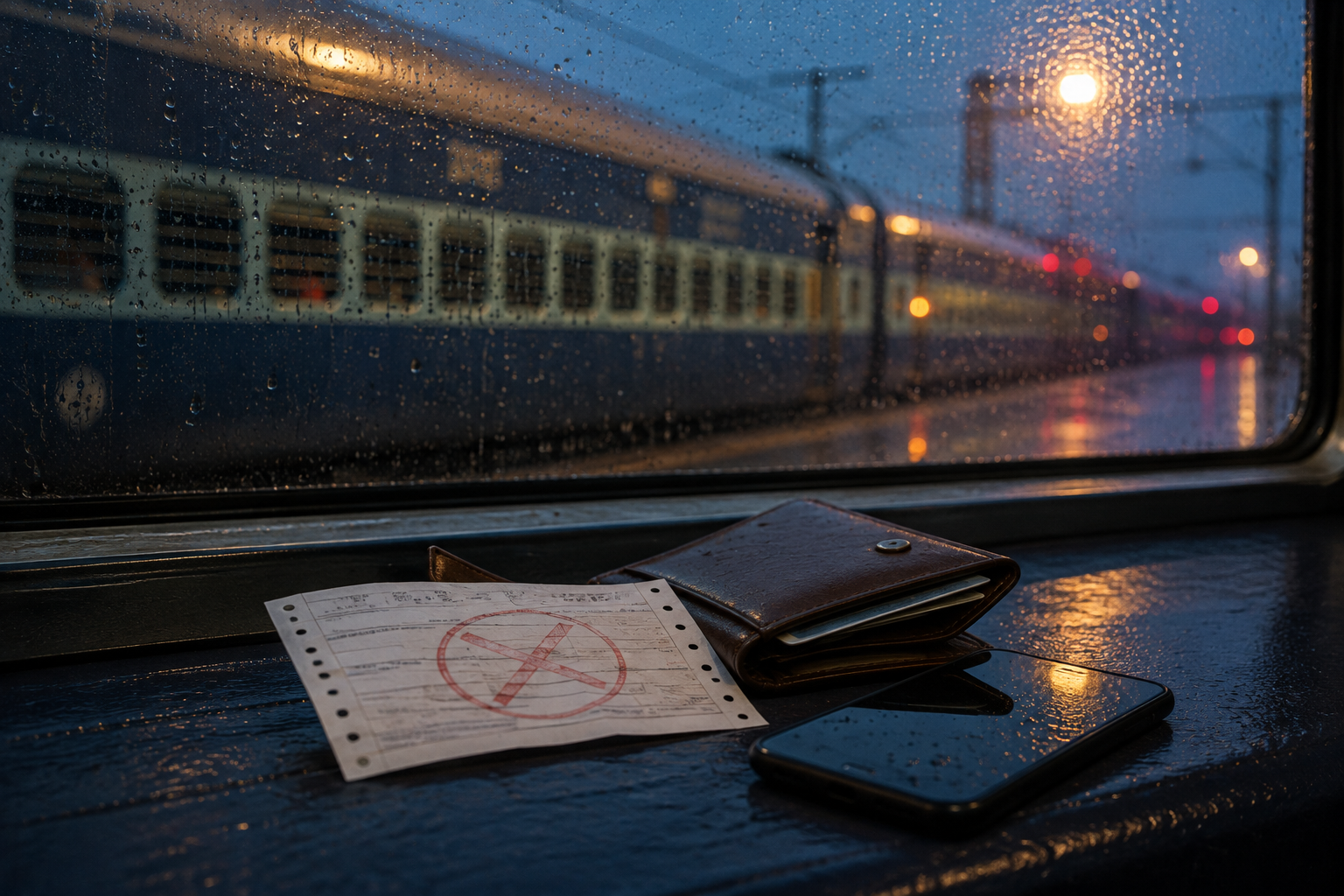
Tatkal tickets offer a lifeline for urgent train travel across India. However, understanding their refund rules is crucial to avoid disappointment and financial loss. This guide breaks down everything you need to know about cancelling Tatkal tickets and securing your refund.
What are Tatkal Tickets and Their Refund Policy?
Tatkal tickets are special quotas on Indian Railways for passengers needing to book tickets at short notice, typically one day before the journey. While they provide immediate booking, confirmed Tatkal tickets are generally non-refundable under normal circumstances.
This policy ensures that genuine urgent travellers get seats and prevents misuse. However, there are specific, well-defined situations where a refund is applicable, especially if the train service itself is disrupted. Knowing these conditions is key for any Tatkal traveller.
How Tatkal Ticket Cancellation and Refunds Work
Cancelling a Tatkal ticket involves specific steps on the IRCTC website or app, with refund eligibility depending heavily on the ticket's status and any train service disruptions. If your Tatkal ticket is confirmed, you typically won't get a refund upon cancellation by choice.
Here’s how the process generally works:
- Log in to IRCTC: Access your IRCTC account on the website or mobile app.
- Navigate to 'My Bookings': Find the specific Tatkal ticket you wish to cancel.
- Select 'Cancel Ticket': If the option is available, select it. For confirmed Tatkal tickets, this option might be greyed out or come with a clear warning about no refund.
- Confirm Cancellation: Review the details and confirm your cancellation request.
- Refund Processing:
- For Waitlisted (WL) or RAC Tatkal tickets: If your ticket remains WL or RAC after chart preparation, it is automatically cancelled by IRCTC. You do not need to initiate a cancellation request. The refund is processed automatically to your original payment method after deducting clerkage charges.
- For Confirmed Tatkal tickets under specific conditions: If your confirmed Tatkal ticket becomes eligible for a refund due to train cancellation, significant delay, or other specific reasons (detailed below), you might need to file a Ticket Deposit Receipt (TDR) through the IRCTC website.
- Check Refund Status: You can track the status of your refund through the 'My Transactions' or 'Refund Status' section on IRCTC. For an estimate of your potential refund, use an IRCTC refund calculator.
Key Tatkal Refund Rules You Must Know
Confirmed Tatkal tickets are generally non-refundable. However, Indian Railways provides full refunds under specific circumstances related to train operations.
Here are the crucial scenarios where you can claim a full refund for your Tatkal ticket:
- Train Cancelled: If the train is cancelled by Indian Railways, a full refund of the fare is granted. This applies to all passengers, including those with Tatkal tickets.
- Train Delayed Significantly: A full refund is permissible if the train is delayed by more than three hours at its originating station or at your boarding station, and you choose not to travel. You must file a TDR before the actual departure of the train.
- Train Diverted: If the train's route is diverted and your boarding station or destination station is no longer on the diverted route, you are eligible for a full refund. A TDR must be filed.
- Passenger Not Accommodated: If you are not accommodated in the class for which your Tatkal ticket was booked, and you refuse to travel in a lower class, you can claim a full refund. This requires certification from the TTE (Travelling Ticket Examiner).
- AC Failure: In case of AC failure in an AC class coach and you refuse to travel in a non-AC coach, you are entitled to a full refund. A TDR must be filed, supported by a TTE certificate.
For Waitlisted (WL) and RAC Tatkal Tickets: If your Tatkal ticket is waitlisted or RAC and remains so even after the chart preparation, it will be automatically cancelled by IRCTC. A refund will be processed to your account after deducting a nominal clerkage charge. You do not need to file a TDR for these cases.
Common Mistakes to Avoid When Cancelling Tatkal Tickets
Understanding Tatkal refund rules can be complex. Avoiding these common mistakes will save you time and potential financial loss.
- Expecting a Full Refund for Confirmed Tickets: The biggest mistake is assuming you can cancel a confirmed Tatkal ticket and get a full refund for any reason. Confirmed Tatkal tickets are non-refundable if you cancel them voluntarily without a valid reason related to train disruption. Always check the specific conditions.
- Not Monitoring Train Status: Failing to check if your train is delayed or cancelled can lead to missing the window for filing a TDR. If a train is delayed by over 3 hours, you must file a TDR before the train's actual departure to claim a refund.
- Missing TDR Filing Deadlines: For eligible refund cases (like train delays or diversions), there are strict deadlines for filing a TDR. Missing these deadlines means forfeiting your refund, even if you were otherwise eligible.
- Not Understanding Automatic Cancellation: Some passengers mistakenly try to cancel their waitlisted or RAC Tatkal tickets manually after chart preparation. These tickets are automatically cancelled by IRCTC, and a refund (minus clerkage) is processed without any action from your side. Manual cancellation attempts might complicate the process.
- Expecting Tatkal Charges Refund: The Tatkal premium (the extra charge over the basic fare) is generally non-refundable. Even in cases where a refund is issued, it typically applies only to the basic fare, after deducting any applicable clerkage.
Tips for Maximising Your Tatkal Refund
While confirmed Tatkal tickets are mostly non-refundable, knowing how to act in specific situations can help you secure a refund when eligible.
- Stay Informed About Train Status: Always check the live running status of your train before your journey. If you see a significant delay (over 3 hours) or cancellation, you can act promptly.
- File TDR Promptly: If your train is delayed by more than 3 hours, or if there's a diversion, file a TDR through the IRCTC website before the train's actual departure. This is crucial for claiming your refund.
- Understand RAC/Waitlist Auto-Cancellation: If your Tatkal ticket is RAC or waitlisted and doesn't confirm, do not cancel it manually. It will be automatically cancelled by IRCTC after chart preparation, and a refund (minus clerkage) will be processed.
- Document Issues: In cases of non-accommodation or AC failure, ensure you get a certificate from the TTE. This documentation is vital when filing a TDR for such claims.
- Plan Ahead for Tatkal Booking: To avoid last-minute cancellations due to changed plans, try to book Tatkal only when absolutely necessary. Remember, Tatkal tickets open at 10:00 AM IST for AC classes and 11:00 AM IST for non-AC classes, one day before the journey. You can use Train Genie's free email reminder service to get alerts for both T-60 Advance Reservation Period and Tatkal booking windows, helping you plan better and avoid urgent bookings.
Tatkal Booking Timings and Charges
Understanding Tatkal booking timings and charges is essential, as these factors directly influence your booking strategy and potential refund scenarios.
Tatkal tickets are released one day in advance of the journey date, excluding the day of journey.
- AC Classes (1A, 2A, 3A, CC, EC): Booking opens at 10:00 AM IST.
- Non-AC Classes (Sleeper, Second Sitting/2S): Booking opens at 11:00 AM IST.
As of 2025, authorised agents are barred from booking Tatkal tickets for the first 30 minutes of the window. This means individual users get a head-start: AC bookings from 10:00 AM to 10:30 AM IST, and non-AC bookings from 11:00 AM to 11:30 AM IST. Additionally, online Tatkal booking requires an Aadhaar-authenticated IRCTC account, with Aadhaar OTP mandatory (effective July 2025).
Tatkal tickets are NOT available for First AC (1A) or Executive Class (EC) coaches.
The charges for Tatkal tickets are a percentage of the basic fare, subject to minimum and maximum caps:
| Class | % of Basic Fare | Min Charge (₹) | Max Charge (₹) |
|---|---|---|---|
| Second Sitting (2S) | 10% | 10 | 15 |
| Sleeper (SL) | 30% | 100 | 200 |
| AC Chair Car (CC) | 30% | 125 | 225 |
| AC 3 Tier (3A) | 30% | 300 | 400 |
| AC 2 Tier (2A) | 30% | 400 | 500 |
These charges are non-refundable, even if you are eligible for a refund on the basic fare. For more detailed information on booking windows and strategies, refer to our guide on Tatkal booking time.
Frequently Asked Questions
Q: Can I get a full refund on a confirmed Tatkal ticket?
A: Generally, confirmed Tatkal tickets are non-refundable if you cancel them voluntarily. However, a full refund is possible if the train is cancelled, delayed by more than 3 hours, diverted, or if you are not accommodated in your booked class due to railway operational issues.
Q: What happens if my Tatkal ticket is on the waitlist or RAC?
A: If your Tatkal ticket remains on the waitlist (WL) or RAC (Reservation Against Cancellation) after chart preparation, it is automatically cancelled by IRCTC. The fare is refunded to your original payment method after deducting a small clerkage charge. You do not need to initiate a cancellation.
Q: Are Tatkal charges refundable?
A: No, the Tatkal charges (the premium over the basic fare) are generally non-refundable. Even in cases where a refund is issued for the basic fare (e.g., for waitlisted tickets or train cancellations), the Tatkal premium amount is typically not returned.
Q: How long does it take to get a Tatkal refund?
A: For automatically cancelled waitlisted or RAC tickets, refunds are usually processed within 3-7 working days. For cases requiring a Ticket Deposit Receipt (TDR) filing, it can take longer, typically 7-15 working days, as IRCTC needs to verify the claim.
Don't miss out on important booking windows. Sign up for Train Genie's free email reminders for T-60 Advance Reservation Period and Tatkal booking slots. Stay informed and book smarter!
Related guides
- Premium Tatkal — Learn premium tatkal — step-by-step guide with tips, rules, and examples. Updated 2026.